
Union County Release Date Meanings
A date can mark several different points. Release eligibility is the first day a person may be considered for parole under the controlling sentence rules. It is not a promise of parole. A tentative or projected date is an administrative calculation based on the facts then in the file. Sentence expiration marks the end of the term as calculated by the custodian. An actual release date records a past event. Those labels should never be merged into one generic “out date.”
Custody status matters first. A person held before trial may leave after bond, dismissal, a court order, or transfer, so there may be no sentence-based date to calculate. A sentenced Union County Jail inmate may have jail credit and a court-set service requirement. A TDOC prisoner may have parole eligibility, sentence credits, and expiration fields. A federal prisoner is governed by a separate federal system. The agency holding the person controls the useful date.
- Release eligibility
- The earliest date on which parole consideration may occur under the sentence rules.
- Projected date
- A date calculated from the current sentence, credits, and record information.
- Expiration
- The calculated end of the sentence, which may differ from parole eligibility.
- Detainer
- A hold from another authority that may cause a transfer when local custody ends.
Find Union County Release Dates
Start with the source that now has custody. The Union County Sheriff and Jail page publishes the jail phone as 865-992-6262. It does not publish a separate jail street address or an online sentence-date tool. Sheriff’s records can be reached at 865-992-5212 and 130 Veteran’s Street, Maynardville, TN 37807. Call before visiting and ask staff to confirm the current records entrance. For a local sentence, request the existing booking and release record, then compare it with the operative court order.
State-prison history uses the TDOC FOIL search. Search by name, TDOC ID, or State ID, match the person carefully, and read each sentence and status label in context. FOIL can show sentence and release information for felony offenders, yet the research could not verify the exact projected or tentative field label from a real CAPTCHA-protected detail. Do not report a label that was not seen. The public pre-search screen does not establish what appears in every result.
- Identify the custodian. Decide whether the person is in Union County Jail, TDOC custody, another jail, federal custody, or no longer confined.
- Check the court case. Use the Union County case portal, then obtain the judgment, bond order, or later order from the clerk.
- Ask for the date by its full label. Distinguish parole eligibility, a calculated date, sentence expiration, and an actual past release.
- Check holds and consecutive terms. Ask whether another sentence, detainer, transfer order, or revocation affects the date.
- Confirm near the event. Contact the current custodian again because a future calculation can change.
The broader Union County released inmate search explains how county, state, court, federal, and immigration records divide custody history. That route helps when a person no longer appears in the system first checked.
Union County FOIL Date Limits
FOIL is a statewide felony-offender tool, not a Union County jail release calendar. It is useful when TDOC has the history or when state supervision follows release. Brief pretrial holds and many local misdemeanor cases may never become TDOC histories. A no-result therefore does not prove release, continued custody, or that no Union County booking occurred. Search spelling, identity, scope, and data timing all matter.
The official FOIL help screen shows how to search the state database. The captured screen is useful for understanding the available lookup route, but it is not a substitute for a genuine person-specific sentence detail.
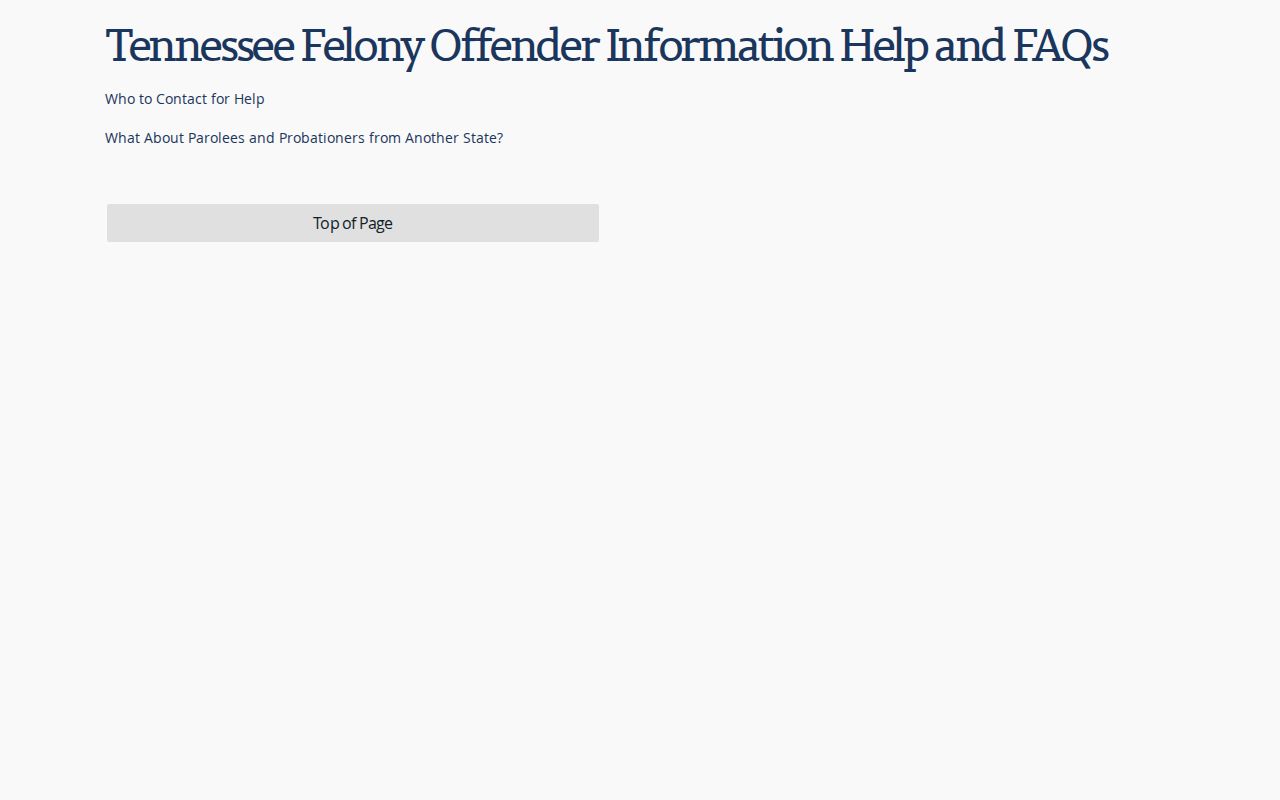
A matched detail must be read with its status, sentence structure, and displayed date labels. Record the date of the lookup as well. A database access date, a court judgment date, and a projected release date answer different questions.
This channel sweep is especially important in Union County. The sheriff does not provide a browser roster, projected-date portal, or durable release archive. For a county sentence, call the jail and request the local record. For a state sentence, use FOIL and TDOC records. For a federal sentence, use the Bureau of Prisons locator, where a future date is still projected and “IN TRANSIT” is not release proof. When a court order is the basis for local release, the clerk’s file gives the legal action that a locator may not explain. VINE serves a different role. It can send notice after a participating custodian reports a custody change, but it is not a permanent sentence calculator. The Union County VINELink release check is best used for notice and later confirmation, not as the sole source for a projected date.
Union County Sentence Credit Rules
Tennessee sentence credits are not automatic discounts. Under Tenn. Code Ann. § 41-21-236, credits may generally range from one to sixteen days per month. The statute caps that total at eight behavior days and eight program days. The warden awards credits under TDOC criteria and may review or remove them. Certain educational or intensive residential substance-use program achievements may support separate sixty-day credits, subject to statutory exclusions.
The effect depends on the offense date and sentence. For an offense before July 1, 2024, or a sentence under two years, the statute describes credits that reduce the sentence. For an offense on or after July 1, 2024, with a term over two years, credits reduce time to parole eligibility but do not change sentence expiration. The statute also extends parts of the behavior-credit framework to qualifying felony offenders serving at least one year in local jails or workhouses. Documented presentence good behavior may earn up to eight days per month under the stated conditions.
No published Union County jail good-time policy was located. That gap matters. State-prison credit rules must not be applied by guesswork to a local jail sentence. Ask the jail or court how jail credit, presentence time, the judgment, and any local calculation fit that specific term. Misdemeanor rules also limit how far credits can reduce a court-set release percentage. The manifest image comes from the current Tennessee sentence-credit statute used for the state framework.
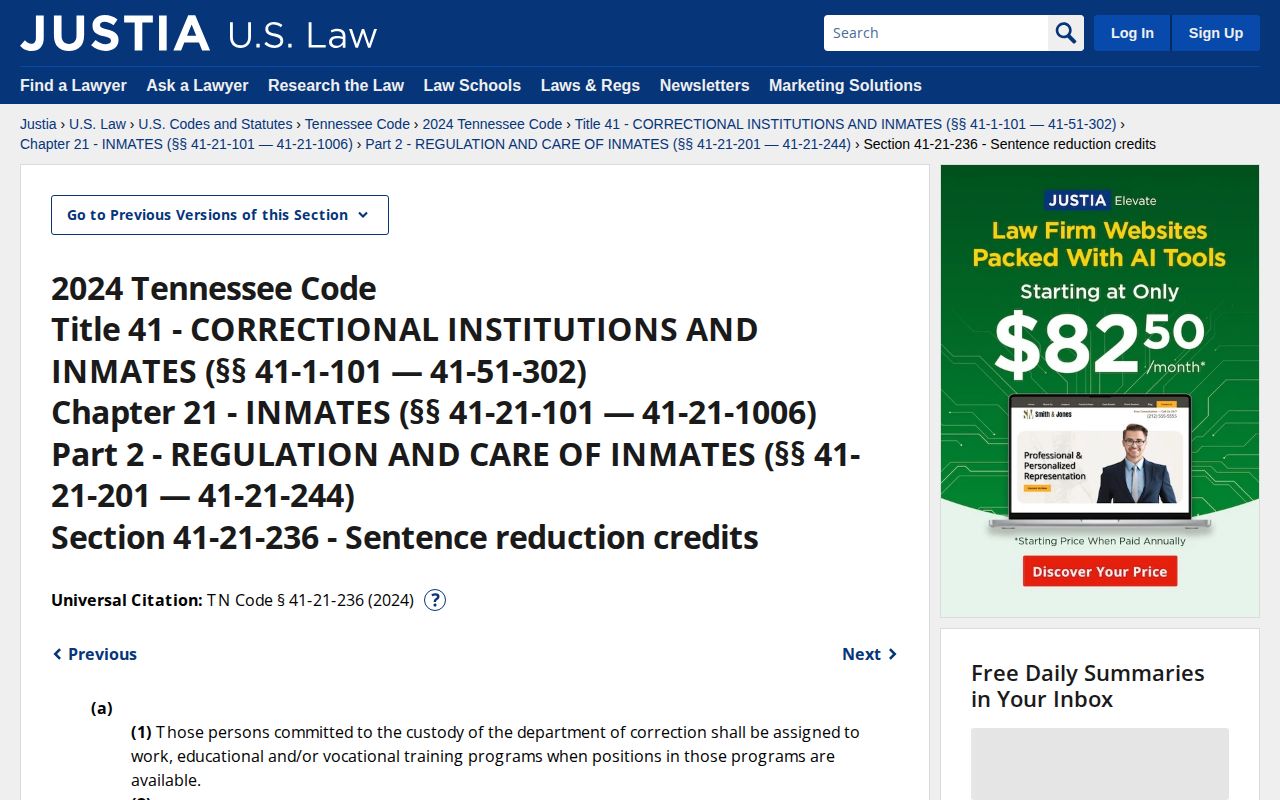
The statute text reinforces why a fixed percentage cannot be applied without the offense date, sentence length, custody setting, and credit record. Note: Credits can change eligibility or expiration in different ways, so preserve the exact date label shown by the custodian.
What Changes Union County Release Dates
A correct calculation can still change. The judgment may contain consecutive terms, which are sentences served one after another. Credits may be earned, retained, reviewed, or lost. A new court order may alter the term. Parole action may set a path to supervised release, but a grant does not itself prove that the person left custody. The release plan and certificate process must still be completed.
| Factor | Possible date effect | Best confirming source |
|---|---|---|
| Jail or presentence credit | Counts qualifying time already served | Judgment, jail, and court file |
| Earned or lost credits | May change eligibility or sentence calculation | TDOC or the sentencing custodian |
| Consecutive terms | Adds separate periods in the statutory calculation | Judgments and sentence detail |
| Court action | May amend, revoke, stay, or end a term | Union County Circuit Court Clerk |
| Parole decision | May grant, deny, defer, rescind, or revoke release | Board final disposition and certificate unit |
| Detainer or transfer | Local custody may end while another custody begins | Releasing and receiving agencies |
A detainer is easy to miss. It is a request or hold from another authority. Union County custody can end while TDOC, another county, federal authorities, or ICE takes over. The county’s recorded release date may be accurate even though the person does not enter the community. Ask for the destination or receiving agency and the transfer date.
Discipline also requires care. A rule violation may affect credits under the applicable policy, but no one should infer a changed date from rumor or a docket entry alone. Request the current official calculation. A later recalculation should be labeled with its own “as of” date so it is not confused with the older result.
Union County Parole Date Distinctions
Tennessee has no single rule requiring every person to serve 85 percent. Tenn. Code Ann. § 40-35-501 contains general eligibility ranges and many offense-specific exceptions. General ranges include 20 or 30 percent for especially mitigated offenders, 30 percent for Range I, 35 percent for Range II, and 45 percent for Range III, less credits where the law allows. Eligibility is the earliest point for consideration. It is not actual release.
Some 85 percent provisions apply only to listed offenses and defined offense dates. Other listed offenses committed on or after July 1, 2021, have no release eligibility and require 100 percent service without sentence reduction by credits. For certain listed offenses on or after July 1, 2024, credits may reduce parole eligibility by up to 15 percent while leaving sentence expiration unchanged. The offense, date, range, sentence length, and statutory subsection must all match before a percentage is stated.
Felony terms over two years generally enter parole-consideration rules. One-to-two-year felony terms may follow determinate-release procedures, with exceptions and notice requirements. Determinate release is a statutory release path for some shorter felony sentences. Mandatory reentry supervision and other TDOC release types can also affect what follows confinement. The official TDOC types of release page describes these distinct state paths.
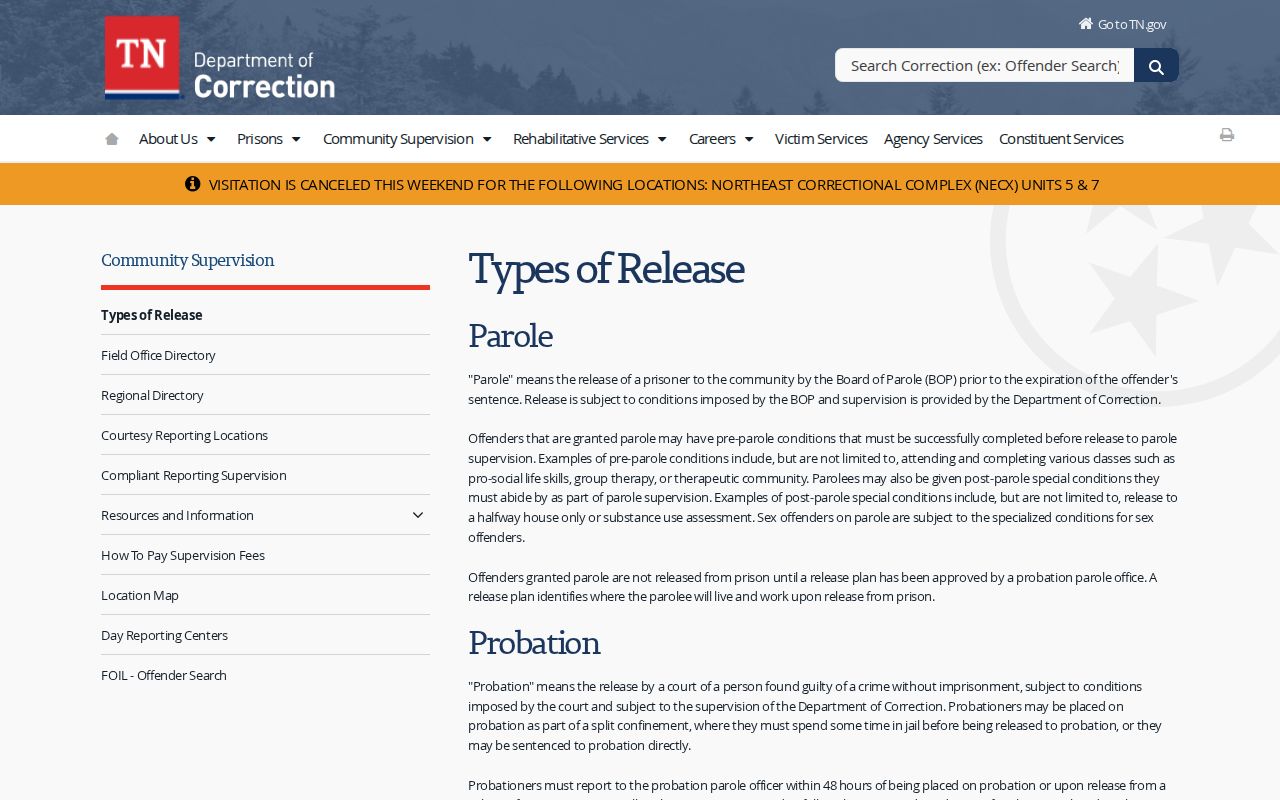
The TDOC source helps distinguish a release type from the date that may precede it. A hearing schedule is only a calendar. It is not a result or a release record. The Tennessee Board of Parole hearings page says state-prison and county-jail schedules are updated weekly each Monday, or Tuesday after a Monday holiday, and are obtained through BD.HearingSchedules@tn.gov. Union County did not appear in the indexed county schedule, so no weekly Union entry should be promised. A denial means no grant at that hearing. A deferral or time setting is not release. Even after a grant, an approved plan and release certificate may still be needed. Request the Board’s final disposition when the decision itself matters, and verify schedule questions at 615-741-1150.
Confirm Union County Release Dates
Near the expected date, verify again with the current custodian. For Union County Jail, call 865-992-6262 and ask whether the person remains in local custody, whether release processing occurred, and whether transfer followed. For the written local record, contact Sheriff’s records at 865-992-5212. Ask for the recorded release date and time, release type or authority, and destination if the existing record includes them. Staff should not be asked to create a new forecast.
For a court-based date, the Union County Circuit Court Clerk maintains judgments, orders, minutes, and dockets. The office is at 901 Main Street, Suite 201, Maynardville, TN 37807, and the phone is 865-992-5493. A bond order explains the end of pretrial custody. A judgment establishes the sentence. A probation or revocation order can explain community supervision or a return to custody.
For TDOC records beyond FOIL, use the archived-record request route or the GovQA portal. TDOC Records Management accepts mail at the Rachel Jackson Building, 2nd Floor, 320 6th Avenue North, Nashville, TN 37243-0465, and answers questions at 615-253-8079. Archive work may carry charges, but TDOC says not to prepay. It sends a charge notice after the search.
The cleanest conclusion states both the label and the source: projected date from a dated TDOC result, parole eligibility from the controlling sentence calculation, or actual release from the jail’s event record. If another agency took custody, name that agency. Precise wording keeps a future estimate from being mistaken for a completed Union County release.