
Union County VINELink Coverage
Tennessee VINE operates through VINELink as a custody-notification service. TDOC joined the statewide service in 2021, and its announcement said many county jails already participated. That statement did not name every jail. Union County Jail participation and the visibility of a specific record must therefore be confirmed in the live Tennessee search or with jail staff rather than assumed from statewide availability. The official Union County Sheriff site does not supply a comparable browser release roster.
For a matched TDOC record, VINE may report current custody or a status change. For a participating local record, it may report the event sent by that jail. The system is prospective: it helps someone watch a current record and receive a future change notice. It is not a permanent Union County release archive, a certified booking sheet, a court disposition service, or a complete list of all people who left custody.
| Custody setting | Correct role for VINELink |
|---|---|
| Union County Jail | Search only if the person and participating custodian appear; confirm any result with the jail. |
| TDOC custody or supervision | Use VINE for alerts and FOIL for current or former offender details. |
| Federal custody | Use BOP or federal court sources; VINELink is not the BOP locator. |
| Immigration custody | Use ICE ODLS after a documented detainer transfer. |
Search Union County VINELink Records
Open the Tennessee VINELink search and look for one person by name or offender ID. A namesake may have a similar spelling, and Union County exists in several states, so the Tennessee jurisdiction and custody context matter. Use only identifiers lawfully known to the searcher and avoid copying unnecessary personal information from a result.
- Select Tennessee in VINELink and choose the offender search.
- Enter the person’s name or offender ID using the most reliable known spelling.
- Review every candidate instead of opening the first similar name.
- Match available identifiers, agency, facility, and known custody history.
- Open the correct record and note its status, source, and time of review.
- If no reliable match appears, call the Union County Jail rather than declaring release.
The captured Tennessee search page below is tied to the official route in the image manifest. A real status screenshot should be used only after a lawful match and with unneeded personal data redacted.
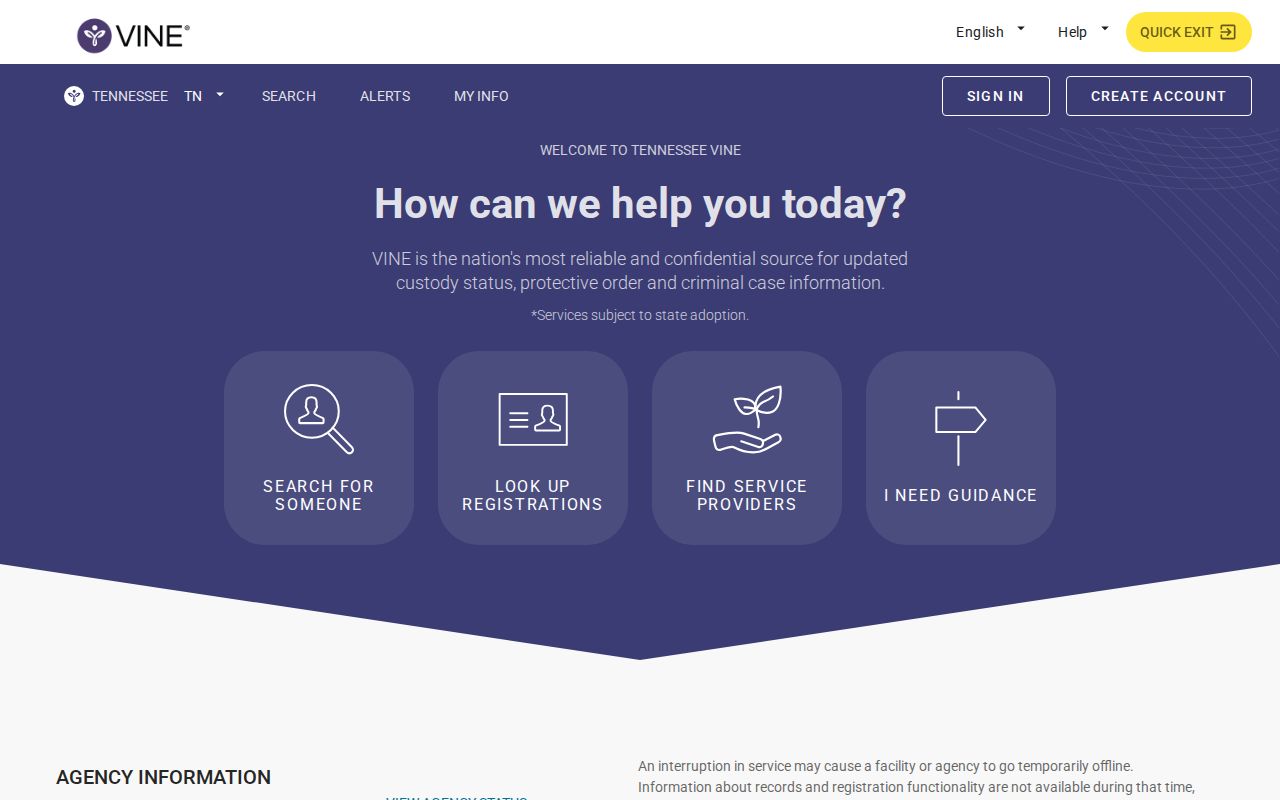
The search page establishes the correct state entry point. It does not establish that Union County Jail currently supplies every booking or custody event.
Union County VINELink Release Fields
The exact fields depend on the matched custodian and current VINELink interface. Read what is displayed, preserve the record’s source, and avoid supplying a field that is not present. A current status is useful for a live check, but it should not be converted into a detailed historical account without the underlying agency record.
| Displayed item | What it can establish |
|---|---|
| Name or offender ID | Helps distinguish candidates when paired with lawful, reliable context. |
| Reporting agency or facility | Identifies the custodian whose event is being reported. |
| Custody or status label | Reports the service’s current view, not a certified release history. |
| Custody-change notice | Shows that a participating custodian reported a release, transfer, or other change. |
| Notification options | Shows which phone, email, text, TTY, or app channels are offered for that record. |
| Date or time, if shown | Dates the reported event or display; it may differ from a court order or physical departure time. |
A person released from Union County Jail will usually no longer appear on a current jail roster, if one is available. That absence is weak evidence because it can also mean transfer, a spelling mismatch, feed delay, expungement, or nonparticipation. A county booking or release record may preserve the release date, time, type, authority, and destination. A court order may explain whether the event involved bond, dismissal, sentence completion, probation, or another result.
Register Union County Release Alerts
Registration begins from the correctly matched offender record. Tennessee materials identify phone, email, text, TTY, and app notification channels, but the options shown for a specific record control. Enter the destination requested by the live interface and complete each channel’s confirmation process. Preserve the confirmation because a saved search without completed registration may not create an active alert.
- Open the matched person’s record and choose the registration or notification option.
- Select one or more channels currently offered for that record.
- Enter the requested phone number, email address, or other destination.
- Follow the on-screen or channel-specific verification prompts.
- If a phone workflow asks for a PIN, choose and retain it so automated calls can be acknowledged.
- Save the final confirmation and update registration if the contact destination changes.
No current official Tennessee source reviewed for the research established a universal PIN length, so instructions should follow the live prompt rather than an older generic rule. Tennessee VINE support is available around the clock at 888-868-4631. Victim Services may also be reached at victim.notification@tn.gov for appropriate program questions.
Note: Keep registration destinations private and preserve the final confirmation screen or message for each active channel.
Confirm Union County Release Alerts
A VINE release alert means the participating reporting custodian recorded a custody change. It may reflect community release, but it can also mark the end of one agency’s custody immediately followed by another agency’s custody. Ask the reporting jail or TDOC for the release type, event time, and destination. If the answer is transfer, move to the named receiving system.
For a local event, call Union County Jail at 865-992-6262. Ask separately whether Union County custody ended, what date and time were recorded, what release type or authority was used, and whether another agency accepted custody. For a durable record, contact Sheriff’s records at 865-992-5212. The Sheriff’s Office is at 130 Veteran’s Street, Maynardville, TN 37807, but the official county page does not separately publish a jail street address. Confirm the appropriate entrance before visiting.
The official sheriff and jail page supplies those contacts. The Union County court portal or clerk can then provide the bond order, judgment, probation order, dismissal, or transfer-related case document that explains why jail custody ended. A telephone confirmation is useful when its date, office, number, and limited answer are recorded, but a custodian record and operative court order provide more durable proof.
Union County Layered Release Notification
Tennessee uses more than one notification layer. TDOC’s written notice program and VINE can operate together, and the official TDOC release form contains identity, offense, release type and date, sentence-expiration information, and an intended residence at city and state level. The form specifically directs a release by detainer to a Tennessee county facility toward county SAVIN or VINELink follow-up.
That handoff rule is especially useful for a Union County search. A TDOC release notice may mark transfer to a county custodian, while a Union County alert may mark transfer to TDOC, another county, USMS, or ICE. Each alert belongs to the custodian that sent it. Follow the destination field or agency response rather than combining separate events into one broad claim.
The official Tennessee VINE announcement describes the state layer. TDOC’s written policy supplies the detainer handoff rule. Together they show why notification should continue across custodians when a transfer follows “release.”
Union County Release System Limits
VINELink is not the right database for every custody type. For a Tennessee felony offender, FOIL covers people currently or formerly in TDOC custody or supervision and may display status, location, offense, sentence, hearing, and release information. A person with only a brief Union County pretrial stay or misdemeanor may never appear in FOIL. In that case, the jail record and local court file remain central.
Federal releases use the BOP locator. A past release date paired with “RELEASED” means BOP custody ended on the reported date, but court-ordered supervision or another hold may continue. “IN TRANSIT” does not mean released. A person held on a federal matter before BOP designation may require the federal docket, USMS information, and confirmation from the jail that held the person.
When Union County reports an ICE detainer transfer, use ICE ODLS promptly. It covers current ICE custody and people released from ICE custody within the prior 60 days. A current match shows that county custody ended while immigration custody continued. After the limited display window, a non-result proves no particular outcome. The captured ICE resource page documents the post-release window.
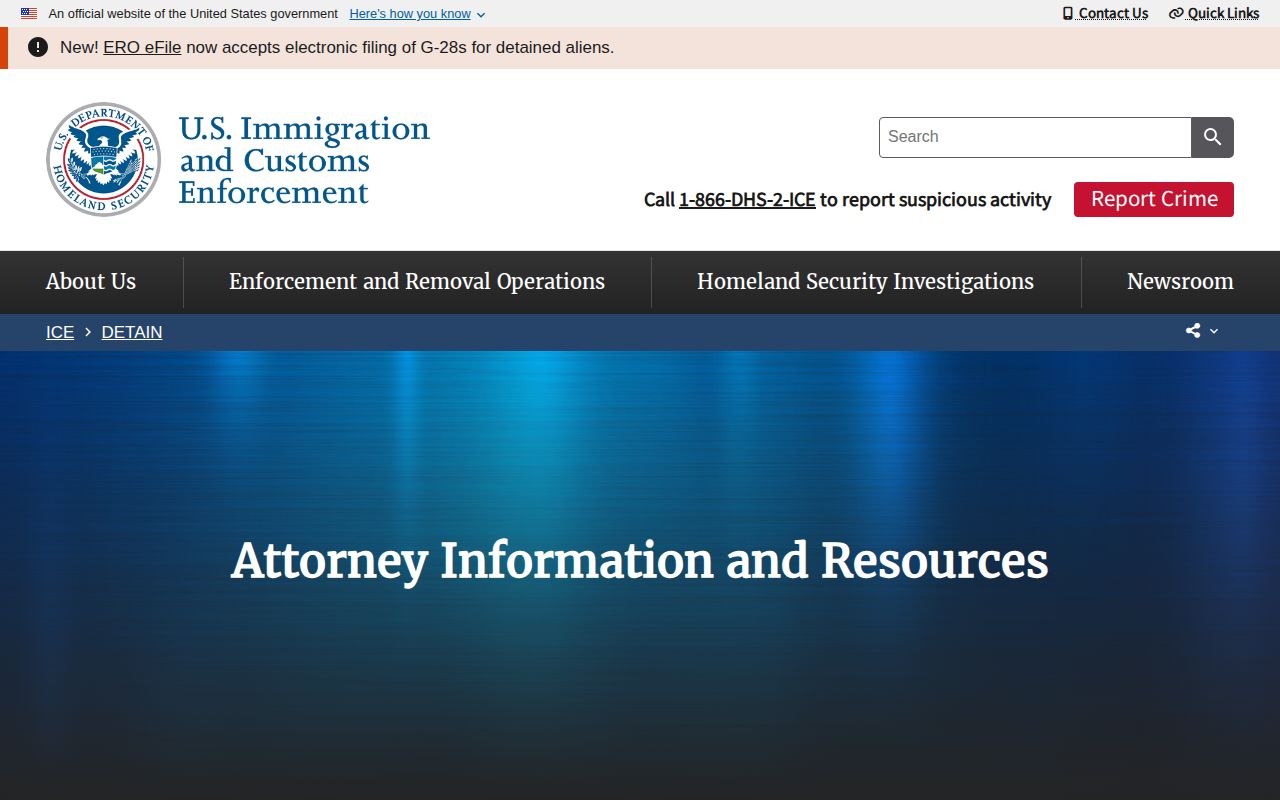
This federal source provides the ICE follow-up boundary. It does not turn VINELink into an immigration locator or establish the result of an immigration case.
Resolve Union County VINELink Failures
A failed search has several possible causes: agency nonparticipation, feed timing, a spelling or identifier mismatch, transfer, an unavailable older record, or a person outside VINE’s current scope. Run a careful alternate spelling or ID search when supported, then stop and call the custodian. Do not infer release from the absence of a result.
If Union County Jail confirms the person left, request the existing booking and release record from Sheriff’s records and inspect the Union County court case portal. If the jail says TDOC transfer, search FOIL. If it names another county, federal authority, or ICE, use that exact destination. The broader Union County released-inmate search path explains how these custodians and durable records fit together.
The TBI registry is also not a substitute for VINELink. It covers only people with a registration obligation and can corroborate a daily community registration status for a covered person. It does not prove a release date or describe the general released population. Errors belong with the registering agency shown on the profile, and the registry’s anti-harassment limits must be honored.